
Urban farming and Chicken keeping
Thursday, January 5, 2012
Urban Farm Online $10 for 1year subscription! Expires at Midnight!
Dusk sets in around 5pm this time of year. Daylight is at a premium in a household of many children whose super power is channeling Jack Lalane and Jack Black.. at once.
Our use of electronic devices sets our energy bill at a premium.
My chickens of course are oblivious to this non-weather we are having.
Soon my crocus' to will pop out at me like Steve Martin complete with banjo.
((Actually that I would really enjoy that. Just putting that out there Universe.))
So we've been doing a lot of reading.. for today only you can get Urban Farm Magazine for $10 for a full year subscription. I subscribe every year and wanted to share this year. I can't tell you how useful this magazine is, seriously order your subscription today. Then we (all four of you who read this blog) will have so much more to talk about.
Happy New Year
Urban Farm Magazine $10/1yr. 01/05/12 only


Friday, December 9, 2011
Freaking Cold.
Its Freaking cold.
A good homesteader needs to make sure that their coop is winterized for their flock.
The cold could lead to an increase in vulnerability and even death. (in some cases).
Many people are unsure how to winterize their coop. Here are some directions on using the deep little method during the winter time to ensure a toasty coop.
Coop Winterization- Deep litter method
To get you in the mood sit in front of your favorite Thomas Kinkade painting.. or in my case.. a Klimpt and watch the following video. I guarantee you it will at least put a smile on your face/beak.
A good homesteader needs to make sure that their coop is winterized for their flock.
The cold could lead to an increase in vulnerability and even death. (in some cases).
Many people are unsure how to winterize their coop. Here are some directions on using the deep little method during the winter time to ensure a toasty coop.
Coop Winterization- Deep litter method
To get you in the mood sit in front of your favorite Thomas Kinkade painting.. or in my case.. a Klimpt and watch the following video. I guarantee you it will at least put a smile on your face/beak.
Saturday, November 19, 2011
Meet Kitten
This is Kitten. She is a Blue/Black Bearded Japanese Bantam Silkie.
Our 1 year old was part of a trio. She and her sister Bunny and along with rooster Ralphie hail from Ohio
Her hobbies are speed walking and being fluffy. She's a bit of a prig about the quality of her treats.


Our 1 year old was part of a trio. She and her sister Bunny and along with rooster Ralphie hail from Ohio
Her hobbies are speed walking and being fluffy. She's a bit of a prig about the quality of her treats.


Typical Summer Morning.
Can't begin to tell you how wonderful it is to have this memory:
Coffee mug in hand, pajamas and knee high rubber boots. Smells like Idaho.. I love it.

Coffee mug in hand, pajamas and knee high rubber boots. Smells like Idaho.. I love it.
Grown Up Talk.
Listen People. Chickens die a lot.. on their own.
So No. I don't mind eating chicken. I like it. It tastes good.
But--I won't kill any of my own chickens.
And-- I'm not shocked and shaken when we lose a chicken now and then.
It's part of having chickens.
I might complain about it a LOT though.. I'm working on that.
A few of my "Grown Up" chicken keeper friends have no problem dispatching a neck like they were snap peas. Swift and Vulcan .
Therein lies my 'Chicken Hypocrisy' debate.. Were I to seriously "Keep it Real" barn yard style I would be like this;

Lately I've been looking at the pages of people and first of all... I'm not really sure y'all realize how beautiful your worlds are, but you don't have nosy neighbors who don't believe that you should be eating your own eggs.
So for those of you who are limited zoning
Riddle Me This: do you dispatch your roosters or re-home them?
I've gone back and forth about culling a chick who starts to show signs of being of the unwanted sex. Sorry Guys... although I'm sure some of you had it coming.
(I'm looking at you mean anti-social neighbor whose dog pissed on my shoe )
Children don't like it when you kill things they name. And honestly folks I'm too big of a bleeding heart to look into their big eyes and say, "Sorry baby but we gonna kill him, bless your heart".
Him of course are the male chicks you have irresponsibly let your children name--and then had to rehome-all our roosters of the BBCE microfarm....
Spike (White Crested Blue Polish), Forrest/Jenny (Turken), Kramer (Splash White Showgirl) and last but not least Ralphie as in Christmas Story (Black/Blue Bearded Silkie).
He really does look like what Ralphie would look like.. if he were a chicken. How could I kill something who represents Raphie? I mean come on people.
Got distracted.. sorry
So absolutely no disrespect to those of you Farm Sturdy people who aren't me and have no problem with this. I mean that in the best sense.
How does everyone handle this?
What are some good ways to learn to buck up and do whats right or......WELL, come on they're little kids.. they'll believe pretty much anything.
Dead Fancy Bird Zen
It doesn't matter how far I travel I'm always reminded that born and raised in Idaho back in the 1970s was about living in a farming community. Everyone had chickens, gardens, squash patches, fruit trees and most of all grown up trees. Big trees.
I took from this upbringing the revelation that there is inherent good in those who care for their environment. Their land, their family, their character.
So why am I writing about a Dead Fancy Bird?
HRH Margaret is.. or rather, was, my fancy breed bird. She was a Belgian d'Uccle Mille Fleur.
My Spidy-senses should have been tipped off by the fact that her name weighed more than she did.
If anyone has happened to catch my previous posts, on my ill-fated dabblings into the magic of hatching eggs, you will understand the following better than anyone else.
Maggie was the lone chick to have survived my inept hatching contraptions and various flock attacks by dogs and the weather. She was almost a year old, and quite gorgeous. You might remember that I ordered all those wonderful fancy eggs not too long ago. Yep. I thought I was Caroline fricking Ingalls. In reality it was a little closer to this:

Anyhow-- she managed to survive my best attempts to snuff her here at Chicken Survivor Island.
Over this last year it seems I've become the female equivalent of Lenny from the Grapes of Wrath.
Thank God someone talked me out of rabbits. Gretchen Anderson might have had to give some quote on how many Backyard Chicken Keepers go off the deep end.
Ok.. I have to stay focused.
Maggie's breed type and champion lines were what attracted me to her. Her brother Winston died last year from-- I kid you not-- a heart attack after a vicious puppy barking incident involving my chihuahua.
Heart attacks in certain fowl are not uncommon. This can actually happen in some breeds of birds... and I knew that.
I also knew that even with champion breed lines, certain birds requires a home for which those types of breeds are more suited.
So...at the end of the day I'm left with no one to blame and a Dead Fancy Bird. I get the Zen and learned my lesson from her death. So please don't flame me with hate mail.
Still, the Idaho Matriarch in me didn't like not having something to show for the effort. Needless to say I have a ziploc bag full of beautiful speckled super soft feathers that I'm determined to make into jewelry.
I'm sure my creations will be picked up immediately for Paris Fashion Week and I'll start a charity in HRH Maggie's name dedicated to congenital heart defect among fancy bird breeds.
But most likely they will end up gracing our Holiday Tree... glued to macaroni art and covered in glitter.
I promise to think about my Dead Fancy Bird Zen every time I look at the feathers.
I took from this upbringing the revelation that there is inherent good in those who care for their environment. Their land, their family, their character.
So why am I writing about a Dead Fancy Bird?
HRH Margaret is.. or rather, was, my fancy breed bird. She was a Belgian d'Uccle Mille Fleur.
My Spidy-senses should have been tipped off by the fact that her name weighed more than she did.
If anyone has happened to catch my previous posts, on my ill-fated dabblings into the magic of hatching eggs, you will understand the following better than anyone else.
Maggie was the lone chick to have survived my inept hatching contraptions and various flock attacks by dogs and the weather. She was almost a year old, and quite gorgeous. You might remember that I ordered all those wonderful fancy eggs not too long ago. Yep. I thought I was Caroline fricking Ingalls. In reality it was a little closer to this:
Anyhow-- she managed to survive my best attempts to snuff her here at Chicken Survivor Island.
Over this last year it seems I've become the female equivalent of Lenny from the Grapes of Wrath.
Thank God someone talked me out of rabbits. Gretchen Anderson might have had to give some quote on how many Backyard Chicken Keepers go off the deep end.
Ok.. I have to stay focused.
Maggie's breed type and champion lines were what attracted me to her. Her brother Winston died last year from-- I kid you not-- a heart attack after a vicious puppy barking incident involving my chihuahua.
Heart attacks in certain fowl are not uncommon. This can actually happen in some breeds of birds... and I knew that.
I also knew that even with champion breed lines, certain birds requires a home for which those types of breeds are more suited.
So...at the end of the day I'm left with no one to blame and a Dead Fancy Bird. I get the Zen and learned my lesson from her death. So please don't flame me with hate mail.
Still, the Idaho Matriarch in me didn't like not having something to show for the effort. Needless to say I have a ziploc bag full of beautiful speckled super soft feathers that I'm determined to make into jewelry.
I'm sure my creations will be picked up immediately for Paris Fashion Week and I'll start a charity in HRH Maggie's name dedicated to congenital heart defect among fancy bird breeds.
But most likely they will end up gracing our Holiday Tree... glued to macaroni art and covered in glitter.
I promise to think about my Dead Fancy Bird Zen every time I look at the feathers.
Damnit I'm still here...
Well hey y'all. I missed you too. Gotta say that I LOVED that people actually noticed and said something. *tear* .. oh you all do give a rats ass. *thank you* And sometimes that's enough.. lately it means a lot.
The soundtrack to this post is Jeff Buckley's cover of Hallelujah... the album cut. He gets too noodle-y in the live version.
As a Mother and Human being.. it's been hard to not really get a sense of coming change...
I had to take a break from blogging and at times eating while sitting. Our reality as a family has had to do some important but challenging shifting. We are one of the fortunate here in the Boise Valley to be able to continue to maintain a normal way life. Our family still lives and loves our home.
Change is coming to our little piece of heaven by means of improvement and incredible sadness.
The centerpiece of Family Micro Farm is our beloved trees. Oak, Maple, Elm, Apple, Cherry, Apricot.... we have more than a few of each. It seems the main trees are in the way of a Power line that the city of Boise is moving for a much needed improvement to our area. It's something that has left me a little out of my head.. especially since what we understood after our inquiry about the project is that our property would not be impacted. Until of course they showed up to cut our trees in half. So we are working it out together.. hopefully we can come to a good place.
Our family has also grown and it means adjusting schedules, more mouths to feed, bathe, and sometimes try to ignore. I kid. Sort of.
The Flock is doing well. We've had losses in the last few months. I'll be blogging more about them in the next few minutes.
So in short...thank you.. for giving a damn. And I mean that sincerely

The soundtrack to this post is Jeff Buckley's cover of Hallelujah... the album cut. He gets too noodle-y in the live version.
As a Mother and Human being.. it's been hard to not really get a sense of coming change...
I had to take a break from blogging and at times eating while sitting. Our reality as a family has had to do some important but challenging shifting. We are one of the fortunate here in the Boise Valley to be able to continue to maintain a normal way life. Our family still lives and loves our home.
Change is coming to our little piece of heaven by means of improvement and incredible sadness.
The centerpiece of Family Micro Farm is our beloved trees. Oak, Maple, Elm, Apple, Cherry, Apricot.... we have more than a few of each. It seems the main trees are in the way of a Power line that the city of Boise is moving for a much needed improvement to our area. It's something that has left me a little out of my head.. especially since what we understood after our inquiry about the project is that our property would not be impacted. Until of course they showed up to cut our trees in half. So we are working it out together.. hopefully we can come to a good place.
Our family has also grown and it means adjusting schedules, more mouths to feed, bathe, and sometimes try to ignore. I kid. Sort of.
The Flock is doing well. We've had losses in the last few months. I'll be blogging more about them in the next few minutes.
So in short...thank you.. for giving a damn. And I mean that sincerely

Wednesday, April 27, 2011
Determining-chicken-egg-quality-all-you-need-to-know

Grading Eggs
Commercial chicken eggs are sorted — according to exterior and interior quality — into three grades established by the United States Department of Agriculture (USDA): AA, A and B. For all grades, the shell must be intact. Nutritionally, all grades are the same.
Grades AA and A eggs are nearly identical, the main difference being that Grade A eggs are slightly older than Grade AA eggs. Grade AA eggs therefore have firmer, thicker whites that hold the yolks up high and round, whereas the white of a Grade A egg is “reasonably firm,” meaning it spreads a little farther when you break the egg into a frying pan. Grade A are the eggs you are most likely to see at a grocery store. Both grades are suitable for frying, poaching and other dishes in which appearance is important.
Grade B eggs have stained or abnormal shells, minor blood or meat spots and other trivial defects. They are used in the food industry to make liquid, frozen and powdered egg products, so you are unlikely to find them at a grocery store. Homegrown Grade B eggs are best used for scrambling, baking and similar recipes in which the eggs are stirred.
Any egg that does not fit into one of these three categories is unfit for human use and consumption. Although you needn’t worry about grading your homegrown eggs, the USDA grading system offers a guideline for assessing the quality of the eggs your hens produce.
Exterior Egg Quality
Exterior quality refers to a shell’s appearance, cleanliness and strength. Appearance is important because the shell is the first thing you notice about an egg. Cleanliness is important because the shell is the egg’s first defense against bacterial contamination; the cleaner the shell, the easier it can do its job. Strength influences the egg’s ability to remain intact until you’re ready to use it. The shell accounts for about 12 percent of the weight of a large egg. It is made up of three layers:
The inner, or mammillary, layer encloses the inner and outer membranes surrounding the egg . Between these two membranes is the air space that develops at the large end as the egg ages.


Wednesday, April 6, 2011
Chicken Mites the not so glamorous side of chicken care.
Ok Folks-- just warning you in advance- this is not a post for those wanting to see chickens frolicking in beds of clover, or chickens basking and napping in the sun in the shape of a heart.
Ok Just one.

Now it's time to be a grown up adult who is a responsible chicken keeper.
It's time to check your chickens for mites, ticks, worms.
There are several different types of mites/lice, but the most common ones have tell tale signs that are easily visible by inspecting the bird.
So lets all buck up and take a look at some good ol' chicken mite infestations.


I won't post a picture here because honestly-- it's too gross.
But the big and most important place to check it the chicken's vent... *butt* this is where the mites will be most obvious since it's where the ticks and mites seem to thrive.
I dusted my girls buts just this afternoon with an old salt shaker full of diatomaceous earth. I got quite a work out chasing down chickens and sprinkling powder on em.
I personally like to treat minor infestations with Food grade DE (diatomaceous earth) which has less than 5% silicon. . This is a must have for any chicken coop. Dusted directly onto the chicken it will kill mites, ticks, and other nasty critters.
It's a bit hard to find Food Grade Diatomaceous Earth.
D&B Supply sells 50lb Food Grade Diatomaceous Earth (DE) for $31.99, which should last you about a year.

I also keep the ticks away and the smell of chicken poo to a minimum by dusting areas inside the coop, roost areas, and dust bath areas.
If you find that your chickens have a particularly nasty infestation nothing works better than good ol' Dawn dish liquid and Neosporin, followed up with regular a regular daily dusting of diatomaceous earth.
Then I came inside and washed my hands---- then I took a shower .... twice.
You chickens will love you for caring for them-- and honestly it's a easy measure for the gorgeous and delicious eggs, pest control and entertainment we receive.
How can you tell the difference between mites and lice?
Table 1. Comparison chart to distinguish between lice and mites.
If your flock does have a serious infestation download this pdf guide here on how to treat your flock.
Ok Just one.

Now it's time to be a grown up adult who is a responsible chicken keeper.
It's time to check your chickens for mites, ticks, worms.
There are several different types of mites/lice, but the most common ones have tell tale signs that are easily visible by inspecting the bird.
So lets all buck up and take a look at some good ol' chicken mite infestations.
Chicken with mites infestation on comb

Chicken feet with excessive 'crusty' looking scales are a sign of mites.

This is a close up of the chicken lice/mite eggs-- it looks like pretty gross.

These are the atrocious offenders in all their nasty glory.

Feather mites leave behind what looks like mold on chicken feathers.

I won't post a picture here because honestly-- it's too gross.
But the big and most important place to check it the chicken's vent... *butt* this is where the mites will be most obvious since it's where the ticks and mites seem to thrive.
I dusted my girls buts just this afternoon with an old salt shaker full of diatomaceous earth. I got quite a work out chasing down chickens and sprinkling powder on em.
I personally like to treat minor infestations with Food grade DE (diatomaceous earth) which has less than 5% silicon. . This is a must have for any chicken coop. Dusted directly onto the chicken it will kill mites, ticks, and other nasty critters.
It's a bit hard to find Food Grade Diatomaceous Earth.
D&B Supply sells 50lb Food Grade Diatomaceous Earth (DE) for $31.99, which should last you about a year.
I also keep the ticks away and the smell of chicken poo to a minimum by dusting areas inside the coop, roost areas, and dust bath areas.
If you find that your chickens have a particularly nasty infestation nothing works better than good ol' Dawn dish liquid and Neosporin, followed up with regular a regular daily dusting of diatomaceous earth.
Then I came inside and washed my hands---- then I took a shower .... twice.
You chickens will love you for caring for them-- and honestly it's a easy measure for the gorgeous and delicious eggs, pest control and entertainment we receive.
How can you tell the difference between mites and lice?
Table 1. Comparison chart to distinguish between lice and mites.
| Lice | Mites | |
|---|---|---|
| Size | 2-3 millimeters long | 1 millimeter diameter (ground pepper) |
| Speed | Fast-moving | Slow-moving |
| Color | Straw-colored (light brown) | Dark reddish black |
| Egg location | Base of feather shaft | Along feather shaft |
| Egg color | White | White or off-white |
| Best detection time | Daytime | Nighttime or Daytime |
| Location | Lives only on host | Lives on host and in environment |
If your flock does have a serious infestation download this pdf guide here on how to treat your flock.
Saturday, March 19, 2011
Yawn-- coming out of hiberation.
Despite the recent show of snow and the harsh winds-- this is my type of weather. Brisk and sunny.
I've crawled out of my warm blankets and smile at chickens who are happy to see the ground and the beginnings of green shoots once again.
To further set the mood two of my chickens now more than a year old have gone broody.
My Showgirl Silkie (Freydis) and the other black silkie (Kitten). Sadly they have no rooster to fertilize their eggs, but I may be bringing back our beloved silkie rooster Ralphie to help out with that department.
My spouse of course sports a sigh that tells me he remembers having to deal with Chez Ralphie-- a makeshift box in the mudroom where Ralphie slept and stayed in until 10am or so in the morning. This was necessary to keep peace with our neighbors-- and to not expose them to a 5am wakeup call. Ralphie is coming back for vacation for a short time from the country to help the ladies fulfill their needs as mothers.
Soon we will have a few new clutches of silkie baby chicks and showgirl baby chicks.
The eggs have come with more consistency and we are averaging about 5-8 eggs a day. And I'm looking forward to keeping anyone who might be reading this blog entertained with the new spring and it's many adventures in backyard chickens.
I've crawled out of my warm blankets and smile at chickens who are happy to see the ground and the beginnings of green shoots once again.
To further set the mood two of my chickens now more than a year old have gone broody.
My Showgirl Silkie (Freydis) and the other black silkie (Kitten). Sadly they have no rooster to fertilize their eggs, but I may be bringing back our beloved silkie rooster Ralphie to help out with that department.
My spouse of course sports a sigh that tells me he remembers having to deal with Chez Ralphie-- a makeshift box in the mudroom where Ralphie slept and stayed in until 10am or so in the morning. This was necessary to keep peace with our neighbors-- and to not expose them to a 5am wakeup call. Ralphie is coming back for vacation for a short time from the country to help the ladies fulfill their needs as mothers.
Soon we will have a few new clutches of silkie baby chicks and showgirl baby chicks.
The eggs have come with more consistency and we are averaging about 5-8 eggs a day. And I'm looking forward to keeping anyone who might be reading this blog entertained with the new spring and it's many adventures in backyard chickens.
Thursday, October 28, 2010
Winterization for chickens...
Indian Summer has entered and is brushing her skirt of golden leaves over the valley. Fall is officially here and winter is coming soon.

If this is your first fall with chickens, there are a few things we might want to think about doing for our feathered friends.
Coop Maintenance: The winterization of your coop depends on what type of coop you have.
It's time to make sure that your coop is going to keep your little chicken nuggets from freezing over the winter. Many have insulated walls in their coops making this process pretty easy.
Most breeds of chickens are very winter hardy, but in case you might have treated yourself to a rare bantam breed or two you might want to read up on how to properly care for them in the winter.
Here is a guide that will give you info on how cold hardy your chick-a-dees are.
So now we know about our chickens and how cold hardy they are. Of course I'm not at all opposed to letting the most delicate roam free in the house with a fashionable chicken diaper on.
I have a cedar slatted coop with an open tool cloth wire floor.(ahem-- that I made myself, ah-- thank you very much, oh your too kind, stop applauding...

My little 6x4 coop has been oh-so handy dandy in the summer to clean quickly and keep and allow for ventilation.
Now with the winter coming I plan on using the deep litter method on the floor. This will allow the coop to be insulated by hay and keep the hay changing to a minimum so as to not freeze my toasties off.
On especially cold nights I also have a handy dandy heat lamp that setup in the coop.
So what is the Deep litter method, you ask? Well grab a lap chicken and a cup of tea and I'll tell ya!
The Deep Litter Method for the coop is just what it implies. Allowing the litter (wood shavings) to build up over a weeks, months helps heat the coop (because that's what chicken manure as compost does). It in turn helps keep the chickens warmer in the colder months.
This means minimal cleanings and only occasional upkeep.
DEEP LITTER METHOD:
2.On the floor of the coop add 6 inches of pine shavings. You can add only a few handfuls of hay if you like as well. I like to add it to keep the litter from clumping too much.
3. Sprinkle a fine layer of food grade Diatomaceous Earth on the pine shavings. (I use my flour sifter)
4. Lightly rake the shavings and the DE together and every other day or so as needed.
5. Every month or so afterward add another 1-2 inches of pine shavings and another sprinkling of DE. Then lightly rake. (your chickens might even do this for you!)
In the spring time you can clean out the coop and add the litter to your compost pile. It makes a wonderful addition flowerbeds and plants.
Nice clean comfy coop in the winter will help our flocks stay happy and in turn be better for egg production, which is already tough in the winter.
For more information on Diatomaceous Earth - click below to find a study on litter quality and chicken broiler performance. The study is done on broilers but I think can be expanded to apply to all chicken breeds.

If this is your first fall with chickens, there are a few things we might want to think about doing for our feathered friends.
Coop Maintenance: The winterization of your coop depends on what type of coop you have.
It's time to make sure that your coop is going to keep your little chicken nuggets from freezing over the winter. Many have insulated walls in their coops making this process pretty easy.
Most breeds of chickens are very winter hardy, but in case you might have treated yourself to a rare bantam breed or two you might want to read up on how to properly care for them in the winter.
Here is a guide that will give you info on how cold hardy your chick-a-dees are.
So now we know about our chickens and how cold hardy they are. Of course I'm not at all opposed to letting the most delicate roam free in the house with a fashionable chicken diaper on.

My little 6x4 coop has been oh-so handy dandy in the summer to clean quickly and keep and allow for ventilation.
Now with the winter coming I plan on using the deep litter method on the floor. This will allow the coop to be insulated by hay and keep the hay changing to a minimum so as to not freeze my toasties off.
On especially cold nights I also have a handy dandy heat lamp that setup in the coop.
So what is the Deep litter method, you ask? Well grab a lap chicken and a cup of tea and I'll tell ya!
The Deep Litter Method for the coop is just what it implies. Allowing the litter (wood shavings) to build up over a weeks, months helps heat the coop (because that's what chicken manure as compost does). It in turn helps keep the chickens warmer in the colder months.
This means minimal cleanings and only occasional upkeep.
DEEP LITTER METHOD:
You will need
- Pine Shavings, and Hay if desired.
- 1/2 lb of Food Grade Diatomaceous Earth (DE) --a natural substance which has long been used to as a natural pest control and absorber and dehydrator. (It helps dry chicken poopie). It also has a side use as a nutritional supplement.
- I usually buy my Diatomaceous Earth at the North End Organic Nursery.

2.On the floor of the coop add 6 inches of pine shavings. You can add only a few handfuls of hay if you like as well. I like to add it to keep the litter from clumping too much.
3. Sprinkle a fine layer of food grade Diatomaceous Earth on the pine shavings. (I use my flour sifter)
4. Lightly rake the shavings and the DE together and every other day or so as needed.
5. Every month or so afterward add another 1-2 inches of pine shavings and another sprinkling of DE. Then lightly rake. (your chickens might even do this for you!)
In the spring time you can clean out the coop and add the litter to your compost pile. It makes a wonderful addition flowerbeds and plants.
Nice clean comfy coop in the winter will help our flocks stay happy and in turn be better for egg production, which is already tough in the winter.
For more information on Diatomaceous Earth - click below to find a study on litter quality and chicken broiler performance. The study is done on broilers but I think can be expanded to apply to all chicken breeds.
University of Georgia study on Litter Quality and Broiler Performance -
Friday, September 10, 2010
Eggs, sour crop and mindfulness.
Well if any of you are like me and bought hatchling's in early spring all your hard work is paying off with the gift of one of nature's most perfect foods. Eggs.

All of our spring chicks have grown up and are now laying eggs almost daily. *tear*.

(intro soft guitar and Harry Chapin softly singing "Cat's in the Cradle")
The soft balls of fluff, the giggles watching them run, the running to clean up their poop on the new rug.
Maybe losing a chicken or two to maladies or predators. grrr
I remember not so fondly when my fingers were cramping up into balls of clay from hammering and sawing boards for my coop--- wondering if this was just some sort of folly of which I would soon grow tired.

Not for a second, I don't think, have I thought I made the wrong decision.
Sure their are times when I don't like getting up crazy early to let the girls out of the coop barefoot and then a morning blast from the sprinklers.
A few weeks back I spent my fabulous Saturday night sitting next to our chicken coop with a flashlight in hand holding Nancy my barred rock hen. She was lethargic, unsteady and a bit stiff and had no appetite.
She had sour crop, which is really unpleasant.
Following instructions in my handy dandy chicken book I was holding her wrapped in a towel, head tilted down and massaging her crop which had become the size of a small water balloon.
After massaging for a while I felt this trickle of the most foul smelling droplets of liquid hitting my flip flopped feet.
Eeeessh... and oh sweet mother mary.... pushing past my tendencies to gak, I bucked up and did it... I continued giving sweet feathered Nancy treatment every six hours or so.
She improved, but only for a short while before she went to that big coop in the sky.
I miss her face in the flock. But I'm glad she's not in pain.
And I'm glad that there are other people out there like you who would have done the same thing for any of the girls in their flock.

I've become more mindful this summer, I think.
More mindful of what goes into our bodies and where it comes from.
 More mindful of how to care for creatures and our environment.
Mindful of sources of all the little bits of laughter that I get from my flock.
And I've spent so many hours with my family checking for eggs, cleaning out the coop, raking hay, shooing chickens out of the garden, the list goes on.
I hope those of you on this journey with me have had many of these moments for yourself.


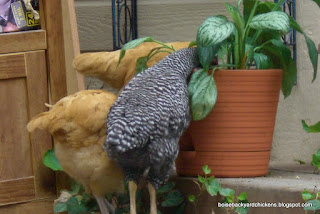

All of our spring chicks have grown up and are now laying eggs almost daily. *tear*.

(intro soft guitar and Harry Chapin softly singing "Cat's in the Cradle")
The soft balls of fluff, the giggles watching them run, the running to clean up their poop on the new rug.
Maybe losing a chicken or two to maladies or predators. grrr
I remember not so fondly when my fingers were cramping up into balls of clay from hammering and sawing boards for my coop--- wondering if this was just some sort of folly of which I would soon grow tired.

Not for a second, I don't think, have I thought I made the wrong decision.
Sure their are times when I don't like getting up crazy early to let the girls out of the coop barefoot and then a morning blast from the sprinklers.
A few weeks back I spent my fabulous Saturday night sitting next to our chicken coop with a flashlight in hand holding Nancy my barred rock hen. She was lethargic, unsteady and a bit stiff and had no appetite.
She had sour crop, which is really unpleasant.
Following instructions in my handy dandy chicken book I was holding her wrapped in a towel, head tilted down and massaging her crop which had become the size of a small water balloon.
After massaging for a while I felt this trickle of the most foul smelling droplets of liquid hitting my flip flopped feet.
Eeeessh... and oh sweet mother mary.... pushing past my tendencies to gak, I bucked up and did it... I continued giving sweet feathered Nancy treatment every six hours or so.
She improved, but only for a short while before she went to that big coop in the sky.
I miss her face in the flock. But I'm glad she's not in pain.
 |
| RIP Nancy |
 |
| Pabu having brunch with his ladies. |

I've become more mindful this summer, I think.
More mindful of what goes into our bodies and where it comes from.
 More mindful of how to care for creatures and our environment.
 Mindful of sources of all the little bits of laughter that I get from my flock.
And I've spent so many hours with my family checking for eggs, cleaning out the coop, raking hay, shooing chickens out of the garden, the list goes on.
I hope those of you on this journey with me have had many of these moments for yourself.


Tour de Coops - Boise: Tour de Coop gets the early bird press
Get out and see other chicken coops in our area!
http://boisechickens.blogspot.com/2010/07/boise-tour-de-coops-september-11-2010.html
This is a great opportunity to gather withlike minded chicken enthusiasts-- err-- people?
I salute lovers of chickens! ba-bawk!
http://boisechickens.blogspot.com/2010/07/boise-tour-de-coops-september-11-2010.html
This is a great opportunity to gather with
Chicken people.
Because lets face it that's what I am and more than likely, behind our Starbucks and Co-op memberships.. that's who we are. I salute lovers of chickens! ba-bawk!
Friday, August 6, 2010
Cock-a-doodle-- what?!!!
Many of us backyard flock keepers may be familiar with the feeling of waking one morning to hear a faint and almost immature "cock-a-doodle doo..." at 5am... we smile softly at the idealism of waking up to a rooster. Then urban farm wife horror when you realize you don't have a rooster, you're not supposed to have a rooster, and that there is a whole law against having rooster.
The mystery deepens as we watch our flock with a paranoid fever and just keep scratching your head trying to figure our which of the Gertrude's is in fact a Gary.
Recently I've just experienced this sensation. Remember watching the Sixth Sense for the first time?
Yep, it was just like that. Finding out my sweet little Turken, Jenny is in fact a Forrest.
He's being sent to live at a family farm in the country. But not so many people are fortunate to know of another chicken lover who is willing to take young cockerel.
Here are few links that may help in this endeavor.
Backyard Chickens auction board. Here you can list your rooster for free. If you decide to offer to shipping then charge only shipping to send them off. Take special care to arrange a time when the temperature is lower than normal in these hot summer days.
Craigslist.com - Here you can post your rooster for free. To improve your chances make sure to include a picture and a few endearing rooster comments.
Facebook - feel free to post Boise Backyard Chickens Facebook page and connect to others who have chickens. You may be able to find someone willing to take a roo for you.
You can also ask to post a flyer at your local feed store, just be careful as most people willing to take a Rooster might be apt to make him dinner and not a pet. :)
Wishing everyone luck-- and wishing my turken Jenny/Forrest a happy life!
The mystery deepens as we watch our flock with a paranoid fever and just keep scratching your head trying to figure our which of the Gertrude's is in fact a Gary.
Recently I've just experienced this sensation. Remember watching the Sixth Sense for the first time?
Yep, it was just like that. Finding out my sweet little Turken, Jenny is in fact a Forrest.
 |
| Jenny/Forrest in full crowing action |
He's being sent to live at a family farm in the country. But not so many people are fortunate to know of another chicken lover who is willing to take young cockerel.
Here are few links that may help in this endeavor.
Backyard Chickens auction board. Here you can list your rooster for free. If you decide to offer to shipping then charge only shipping to send them off. Take special care to arrange a time when the temperature is lower than normal in these hot summer days.
Craigslist.com - Here you can post your rooster for free. To improve your chances make sure to include a picture and a few endearing rooster comments.
Facebook - feel free to post Boise Backyard Chickens Facebook page and connect to others who have chickens. You may be able to find someone willing to take a roo for you.
You can also ask to post a flyer at your local feed store, just be careful as most people willing to take a Rooster might be apt to make him dinner and not a pet. :)
Wishing everyone luck-- and wishing my turken Jenny/Forrest a happy life!
Friday, July 30, 2010
Chicken poop Tea
The chicken is lauded for many wonderful qualities. Fresh eggs, natural pest control, entertainment and of course being able to create wonderful all natural fertilizer for your garden.
Until now I haven't even really ventured to try to use the chicken droppings that have been accumulating. After a little research an alternative popped up.
Chicken Poop Tea. First I thought oh no that sounds like it would taste terrible. No silly me-- it's for fertilizing your plants.
While my research is limited to the time it limited to the length of time it takes for my children to be engrossed in a Spongbob Squarepants episode-- I think the idea is solid.
I'm going to give it a try. Here is the excerpt I found from a website on the matter.

My new silkies are all doing well-- as you can see.

Until now I haven't even really ventured to try to use the chicken droppings that have been accumulating. After a little research an alternative popped up.
Chicken Poop Tea. First I thought oh no that sounds like it would taste terrible. No silly me-- it's for fertilizing your plants.
While my research is limited to the time it limited to the length of time it takes for my children to be engrossed in a Spongbob Squarepants episode-- I think the idea is solid.
I'm going to give it a try. Here is the excerpt I found from a website on the matter.
"To make fertilizer tea, scoop the chicken manure into a burlap bag.
Then, throw a rock into the bag to weigh it down and place the whole thing into a 35-gallon garbage can.
Fill the garbage can with water and let it sit for about three weeks. Once the three weeks are over, you will have nutrient-rich chicken manure fertilizer tea as the water becomes infused with the nutrients from the chicken manure. You can use this fertilizer tea to water your plants to give them a vitamin boost."
I read later on a website that I shouldn't pour the tea directly onto the plants. It should be around the area of the plants to soak into the roots. Ok. Will do.
Update on Winnie and her chicks: Winnie had her chicks-- all five eggs hatched. Three of the died at the hands of other chickens in the yard who wanted chicks of their own. Even after separating Winne and her chicks from the other chickens 3 chicks died when Lola and Clara snatched three of the chicks away.
Poor Winnie-- this is her first try at momma-hood and the bigger chickens are too big for her tiny banty silkie size or her quarter sized chicks.
Two of the chicks remain and will be set in a brooder.
Two of the chicks remain and will be set in a brooder.

| |
| baby chicks in infant sock |
My new silkies are all doing well-- as you can see.
 |
| Huckleberry |

Friday, July 16, 2010
Heat, Death and Eggs.
It's been freakin hot... and I've been busy getting our little suburban micro farm ready for the heat. Soooo... that's my excuse for the long absence. Not a very good one eh?
Well the green house is up, the new shades are in place, the a/c is getting a tune up and we've invested in a water-evaporator cooler to try to relieve the power meter from running round and round and burning a hole in our budget. Anyone else who has done anything to prepare their house for summer? Tips, Idea's? Please do tell!
The chickens are doing well. Here is nut shelled update.
A dog we were fostering killed Ferdinand and Isabella my Rosecomb Pair and Ruby our big reliable Easter Egger. Children crying, feathers everyone, dog gone the next day.


RIP Ferdinand & Isabella
This silver lining was that now I deserved a trip out to Schwartz Farm in Parma Idaho.
Martha was out back and I picked out a mottled blue banty Cochin, (Fluffy). Martha was good enough to let me buy her gorgeous Japanese/Serama Rooster ( Henry), and his mate- a petite grey Japanese bantam (Anne).
All are happily enjoying the backyard and all the bugs they can eat.
Oh oh!! The first chicks we bought from Schwartz Farm back in February are now laying eggs! For the last two eggs we've been finding a big beautiful soft suede colored egg in the coop.
Winnie our partridge silkie hen has become broody and is sitting on a clutch of eggs-- all of them are Henry and Anne's. She only leaves her nest twice a day to eat drink and indulge in a quick dust bath. This is her first try-- so I'm not going to get my hopes up. :(
 My summer of failure ended in a happy note with finding a breeder in Ohio who sold and shipped me her beautiful blue silkie hen and some black silkie chicks. I am still on the hunt to find some Showgirl chickens...
The chickens got under the solar tarp on my garden and made quick work of all the leafy greens, sparing only the prickly bush of the zucchini-- making it necessary to build a greenhouse. Crafty chickens--- all my greens gone from our raised beds.

Still at the end of everyday I look forward to sitting on the lawn and watching the girls come running at me, heads bobbing back and forth to noodle out any treats in my hand.

 They talk and parp at me and each other as if they are asking me questions then settle in next to me and nap at my feet.
Well the green house is up, the new shades are in place, the a/c is getting a tune up and we've invested in a water-evaporator cooler to try to relieve the power meter from running round and round and burning a hole in our budget. Anyone else who has done anything to prepare their house for summer? Tips, Idea's? Please do tell!
The chickens are doing well. Here is nut shelled update.
A dog we were fostering killed Ferdinand and Isabella my Rosecomb Pair and Ruby our big reliable Easter Egger. Children crying, feathers everyone, dog gone the next day.


RIP Ferdinand & Isabella
This silver lining was that now I deserved a trip out to Schwartz Farm in Parma Idaho.
Martha was out back and I picked out a mottled blue banty Cochin, (Fluffy). Martha was good enough to let me buy her gorgeous Japanese/Serama Rooster ( Henry), and his mate- a petite grey Japanese bantam (Anne).
All are happily enjoying the backyard and all the bugs they can eat.
Oh oh!! The first chicks we bought from Schwartz Farm back in February are now laying eggs! For the last two eggs we've been finding a big beautiful soft suede colored egg in the coop.
Winnie our partridge silkie hen has become broody and is sitting on a clutch of eggs-- all of them are Henry and Anne's. She only leaves her nest twice a day to eat drink and indulge in a quick dust bath. This is her first try-- so I'm not going to get my hopes up. :(

The chickens got under the solar tarp on my garden and made quick work of all the leafy greens, sparing only the prickly bush of the zucchini-- making it necessary to build a greenhouse. Crafty chickens--- all my greens gone from our raised beds.

Still at the end of everyday I look forward to sitting on the lawn and watching the girls come running at me, heads bobbing back and forth to noodle out any treats in my hand.


Tuesday, May 18, 2010
A Turken's day out.
Jenny is our bantam turken. She is the only hatchery chick I still have in my pen.
I sold my hatchery silkies at the recent IBBA auction because I needed to make room in my pen for the hatchling's I was expecting.
All are show quality lines- these should be really gorgeous birds. Like Marylin Monroe chickens.. if she were a chicken.
Jenny on the other hand is more of a Pippi Longstocking looking little thing. Bear in mind that for a turken, she is quite cute. She also has the softest demeanor and is so very docile and actually quite cuddly.
 We took a turn in the yard yesterday together and smelled the flowers and watched the other chickens peck about the yard at fat bugs and juicy weeds.. and occasionally my plants..
I will admit- I am smitten with my chickens.
I sold my hatchery silkies at the recent IBBA auction because I needed to make room in my pen for the hatchling's I was expecting.
All are show quality lines- these should be really gorgeous birds. Like Marylin Monroe chickens.. if she were a chicken.
Jenny on the other hand is more of a Pippi Longstocking looking little thing. Bear in mind that for a turken, she is quite cute. She also has the softest demeanor and is so very docile and actually quite cuddly.

I will admit- I am smitten with my chickens.
Wednesday, May 12, 2010
Who loves free?
I've decided that for the few readers out there-- all three of you right? I would offer a give away this month..
To sign up- simply become a friend of Boise Backyard Chickens on Facebook
Or you can become a follower of this blog by clicking on the follow me box in the lower right hand corner.
If you do both- you'll be entered twice and double your chances to win!
I'm not Oprah- so no one will get a new dishwasher or tv, so calm down. Instead the winner will get...
A BRAND NEW CAR! Just kidding.. ahh.
I'll draw names out of a hat in two weeks so go click that link now.
The winner will get:

To sign up- simply become a friend of Boise Backyard Chickens on Facebook
Or you can become a follower of this blog by clicking on the follow me box in the lower right hand corner.
If you do both- you'll be entered twice and double your chances to win!
I'm not Oprah- so no one will get a new dishwasher or tv, so calm down. Instead the winner will get...
A BRAND NEW CAR! Just kidding.. ahh.
I'll draw names out of a hat in two weeks so go click that link now.
The winner will get:
The Joy of Keeping Chickens: The ultimate guide to raising chickens for fun or for profit.

Monday, May 10, 2010
Incubation - Part II The Aftermath.
If anyone out there is actually reading this blog.. maybe someone may have been interested in what happened with my hatch.
It was a complete failure. 32 eggs- Not one chick. Not one hatch. In my hatching group everyone else got tiny bodies of lovey joy wrapped in fluff. I got a rock... then I got the rock taken away because I broke it.

Most likely my Franken-Bator was the final death blow.
I saw movement, but no pips, no little beaks breaking through the shell. On day 24 I candled them again-- no movement. I opened them up yesterday (ironically) on Mother's day to find that their umbilical cord had not closed and they were all covered in a gooey sticky membrane with un-absorbed yolk sacks.
Feeling like a gooey sticky membrane myself, I studied each little lifeless body to see that they also had malformed head and beaks. I referenced the "what went wrong" guide and figured it was the roller coaster ride of temps and humidity.
I learned quite a bit. Darling hubby and kids brought up my spirits with coffee, good chocolate and a new book about chickens.
Relief is a much deserved after thought. In the future to anyone who might actually read this blog-- if you want to start hatching your own chicks here are a few very important lessons I will heed in the future.
1. To save my sanity- get three thermometers. A digital thermometer/hygrometer, a mercury and a stem thermometer.
2. Only candle eggs at 10 and 18 days. I think I candled the eggs too much and all that handling and opening the incubator took it's toll.
3. Incubator location needs to be in a stable temperature area. I put my incubator in our mud room which fluctuates by 5-10 degrees... bad bad.
4. Don't use expensive eggs on your first hatch. In hindsight I should have offered to hatch some barnyard eggs for someone else before popping in my super nice and spendy silkie and cochin eggs.
5. Learn from mistakes. ie: Don't do anything I did in my last post. Bad Bad.
I have a new sets of eggs in the Hovabator which I have placed upstairs in my walk in closet of all places.
Meticulous is my mantra for this hatch.
It was a complete failure. 32 eggs- Not one chick. Not one hatch. In my hatching group everyone else got tiny bodies of lovey joy wrapped in fluff. I got a rock... then I got the rock taken away because I broke it.

Most likely my Franken-Bator was the final death blow.
I saw movement, but no pips, no little beaks breaking through the shell. On day 24 I candled them again-- no movement. I opened them up yesterday (ironically) on Mother's day to find that their umbilical cord had not closed and they were all covered in a gooey sticky membrane with un-absorbed yolk sacks.
Feeling like a gooey sticky membrane myself, I studied each little lifeless body to see that they also had malformed head and beaks. I referenced the "what went wrong" guide and figured it was the roller coaster ride of temps and humidity.
I learned quite a bit. Darling hubby and kids brought up my spirits with coffee, good chocolate and a new book about chickens.
Relief is a much deserved after thought. In the future to anyone who might actually read this blog-- if you want to start hatching your own chicks here are a few very important lessons I will heed in the future.
1. To save my sanity- get three thermometers. A digital thermometer/hygrometer, a mercury and a stem thermometer.
2. Only candle eggs at 10 and 18 days. I think I candled the eggs too much and all that handling and opening the incubator took it's toll.
3. Incubator location needs to be in a stable temperature area. I put my incubator in our mud room which fluctuates by 5-10 degrees... bad bad.
4. Don't use expensive eggs on your first hatch. In hindsight I should have offered to hatch some barnyard eggs for someone else before popping in my super nice and spendy silkie and cochin eggs.
5. Learn from mistakes. ie: Don't do anything I did in my last post. Bad Bad.
I have a new sets of eggs in the Hovabator which I have placed upstairs in my walk in closet of all places.
Meticulous is my mantra for this hatch.
Subscribe to:
Posts (Atom)